20th May 2025
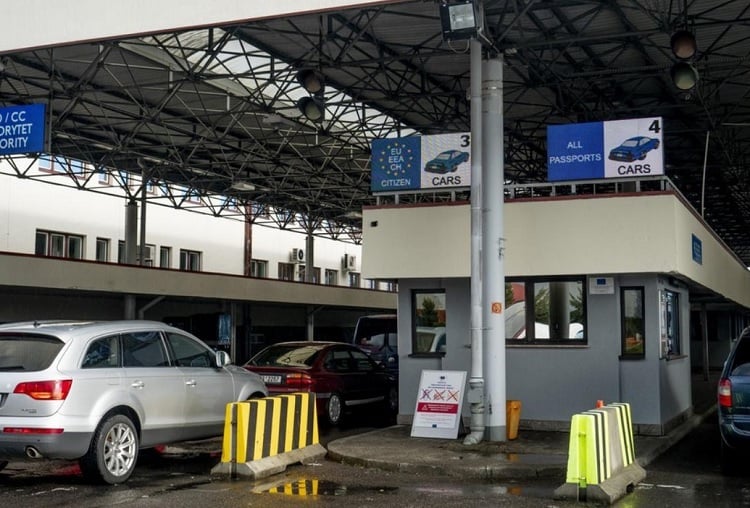
France extends ‘temporary’ border controls for a further six months.
The controls on internal borders are now scheduled to continue until the end of October.
This measure, initially planned to run until 30 April 2025, comes amid persistent threats to internal security and public order.
Controls at France's internal borders were first reinstated in November 2015, following the 13th November terrorist attacks in Paris and Saint-Denis.
The immediate objective of this decision was to ensure security at the international climate conference (COP21), which was held in Paris from 30th November to 12th December, 2015.
However, given the seriousness and persistence of the terrorist threat on the national territory, the government has chosen to maintain these controls beyond the event.
Under Schengen free movement rules, Member States are permitted to temporarily reintroduce border controls in the event of a serious threat to public policy or internal security.
According to the European Commission “The reintroduction of border control at the internal borders must be applied as a last resort measure, in exceptional situations, and must respect the principle of proportionality.”
Nevertheless, the Commission cannot veto the decision of Member State to introduce or continue with such controls.
Since 2015 France has renewed the measure every 6 months.
For the period to October the government have justified the measure due to:
Serious threats to public order and internal security;
Rise in anti-Semitic attacks;
Development of criminal networks facilitating irregular migration and trafficking;
Irregular migration flows towards the Franco-British border that risk being infiltrated by radicalised individuals;
Irregular crossings at the Channel and North Sea borders;
Rise in violence among migrants.
Although the controls have been contested in the courts, in March the Supreme Administrative Court, the Conseil d’État, ruled that the measure conformed with Schengen rules, and was proportionate to the threats facing the country.
The measure concerns all land, air and sea borders with neighbouring countries - Italy, Belgium, Germany, Luxembourg, Switzerland, and Spain.
However, the controls do not imply closure of the border, but merely the temporary suspension of free movement.
Indeed, anyone who has recently been through Schengen borders to France may well have not encountered controls, which have only been reintroduced on a random and non-systematic basis on the main routes into the country. All passengers will have been checked, but not all will be stopped.
France is not the only European country to have such controls in place, with several others having invoked the grave threat to public order and internal security to suspend Schengen rules.
Thus, the controls are in place in Germany until September, the Netherlands until December, and Denmark until November. Italy is due to lift controls in place since December 2024 in June.
Related Reading: