
2nd May 2023
A government-commissioned report says more radical action is needed to deal with the drought crisis.
…
To read the article you need take out a Premium Subscription to France Insider.
A premium subscription will also give you unrestricted access to the complete back catalogue of our articles.
The report, prepared by an inter-governmental committee, was established to undertake a review of the management of the drought last summer.
They point out the “vulnerabilities in our drinking water production and distribution system in the face of climate change.”
The report notes that last summer some large cities “were not far” from supply disruption and 550 small municipalities were unable to provide tap water.
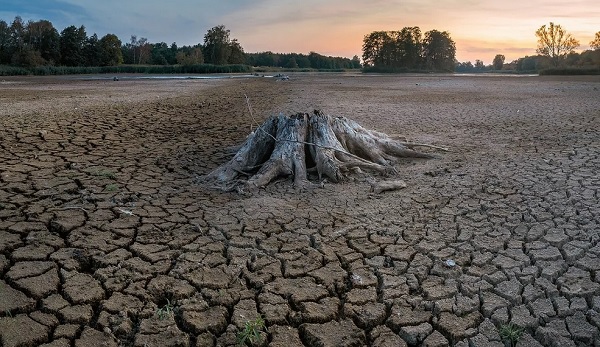
The consequences of the drought were severe: fish mortality in 1,200 rivers that went dry, biodiversity destroyed to a “potentially irreversible” extent, and a significant decline in agricultural yields.
With the possibility that the drought in 2023 could be even worse than that of 2022, the authors make several recommendations “to improve the anticipation and multi-year management of these drought episodes, to know in real time the impacts and reduce them, and to clarify the issues of sharing and prevent conflicts of water use”.
They insist on the need for urgent action for a “radical change in our water management methods” and the taking of “structural measures”.
They state that “Only policies for transforming our uses of water over time will make it possible to avoid sudden ruptures".
They stress the shortcomings of the restrictive measures currently in place: in particular, the impossibility of measuring their effectiveness.
The authors consider that compliance with restrictive measures is poorly monitored, and non-compliance rarely sanctioned. Hence the proposal ”to develop a penal policy and appropriate administrative and judicial police measures“.
They also insist on the need for an ambitious policy of “sobriety”, with a target of reducing consumption by 10% next year and by 25% over 10 years. They call for an acceleration of the policy of reuse of treated wastewater, with the publication of “a positive list of authorised uses".
Although the report makes no firm recommendation, it considers that there would be benefits in transferring responsibility for the management of water supplies from the local to department councils.
Last month President Macron announced a plan for water, but few of the measures advocated in the report are included in the plan, and those which are included are diluted.
In particular, there is nothing about tightening controls in the event of restrictions, and little concrete about what is a key point in the report, namely the need to help agriculture reduce water use. Agriculture accounts for 58% of water consumption.
The "sobriety" objectives set by the government (-10% by 2030) are far below what the report recommends.
Similarly, there is little trace in the plan of increasing human resources in state agencies, where there have been severe budget and job cuts since 2017.
Last month the Bureau of Geological and Mining Research published its latest map on groundwater levels.
It stated that although the situation is more or less normal in Brittany, in the south-west and the Rhône Valley, the levels are “moderately low, low or very low” in the rest of the country.
One of the worst affected departments is the Pyrénées-Orientales, which has not had a day of rain for more than a year. Other departments severely affected area the Bouches-du-Rhône, Var, and Ain.
The conclude by stating that except for “exceptional rainfall events”, groundwater emptying will continue in the coming months, and “many sectors are at proven risk of drought during the summer period”.
Related Reading: