30th July 2025
The European Union's Entry/Exit System (EES) is scheduled to be introduced shortly, so what does it mean for travellers?

After having been delayed numerous times, the EU have announced that the system will become operational in October 2025 (date uncertain!).
The EES will abolish the traditional passport stamping process in place of a fully digital system.
The EES is an automated IT system intended to register non-EU nationals, including both short-stay visa holders and visa-exempt travellers, each time they cross an external Schengen border*. The EES will not operate within the Schengen area.
The primary purpose of the EES is to replace the manual stamping of passports with a speedier, centralised system which provides reliable data on border crossings.
By digitising this process, the EES aims to improve the accuracy of entry and exit records, enhance border security, and facilitate the detection of individuals who exceed the maximum duration of their authorised stay.
1. Biometric Data Collection: The EES will collect and store biometric data (fingerprints and facial images) along with the traveller’s name, type of travel document, and the date and place of entry and exit. This biometric data will be used to verify the identity of travellers and ensure that they comply with the entry and exit regulations of the Schengen area.
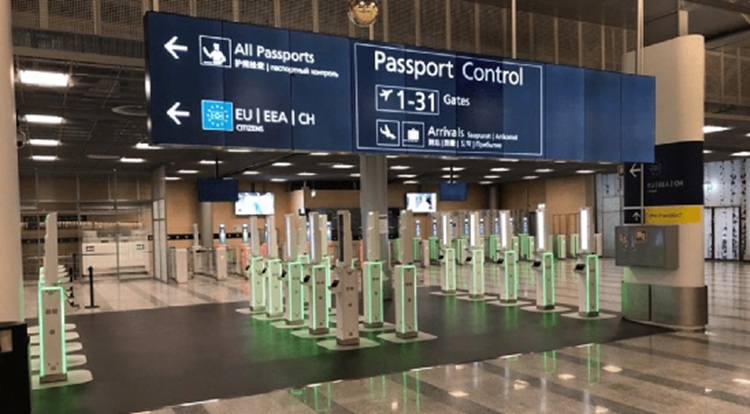
2. Automated Border Control: The system will operate primarily through self-serve kiosks at border control points. Travellers will be required to register their biometric data and travel documents at these kiosks, which will then cross-reference the information with the EES database to verify the traveller’s identity and compliance with entry requirements. Once you have crossed a border at least once, according to the EU website: ‘Your fingerprints or the photo of your face will already be recorded in the EES. The passport control officers will only verify your fingerprints and photo, which will take less time. If you hold a biometric passport, you will be able to enter more quickly using the self-service system (if available at that border crossing point). If your digital file is clear of any impediments to travel, you will usually not need to go via a passport control officer.’ The digital data is, however, only valid for 3 years. Border officials also retain the right to refuse entry.
3. Real-Time Monitoring and Alerts: The EES will provide real-time alerts to border authorities when travellers exceed their permitted stay. The objective is to prevent irregular migration and enhance the security of EU citizens.
4. Integration with Other Systems: The EES will be integrated with other EU security and border management systems, such as the Schengen Information System (SIS) and the Visa Information System (VIS). This integration will enable comprehensive data sharing and improve the overall efficiency of border management within the Schengen area.
The EES will not apply to European nationals (plus Iceland, Liechtenstein, Norway, and Switzerland) or to third-country nationals who have a long-stay visa or residency permit for France or the Schengen area.
Related family members (spouse, registered partner, direct descendants under 21 years or dependant, plus spouse/partner, direct ascendants plus spouse/partner) of an EU national will be required to use EES, although they will not be subject to the 90/180 day rule. They will, however, require a visa to stay in France longer than 3 months.
Those third-country nationals with only a short-stay visa (up to 3 months) or who are visa exempt for a short-stay will be required to use the system.
However, for third-country nationals who are resident in France or who hold a long-term visa, there are fears that the software will not be in place to recognise their exemption from EES, and that at least in the short term they will be required to use the EES system.
The EU has stated that Brexit Withdrawal Agreement beneficiaries can demand a document from their prefecture that will exempt them from registration with the EES.
All persons, including children, will be required to use the system, although no fingerprints will be required for children under 12 years of age. For residents of France with children under 18 not holding a residency permit it is advisable to obtain a minors travel document (Document de circulation pour étranger mineur - DCEM) which must be demanded on-line from the local prefecture. The application can take several months to process. The DCEM is in current use.
Those transiting through Europe with no Schengen stop-over will not be required to use the system.
Similarly exempt are non-EU nationals who are part of an intra-corporate transfer, or for the purposes of research, studies, training, voluntary service, pupil exchange schemes or educational projects and au-pairing.
Those who enter France using a mix of a short-term visa and use of the 90/180 day rule will be required to use the EES system, as the stay will extend beyond the dates of the visa period.
No application is necessary to use the EES and no fee is payable. The process will be carried out at the border. Only with the introduction (in the final quarter of 2026?) of the ETIAS travel authorisation system will it be necessary to make an application under ETIAS. You can find details of the ETIAS at Visa-Free Travel in Europe and 'ETIAS'
There are fears that there will be significant delays at border entry points due to a lack of traveller awareness and potential problems with the software.
The use of an automated process is also going to increase the risk that system errors will occur. As a result, carrying all proof of identity, residence and travel etc is advisable.
In order to reduce the risk of delays the EU has agreed to the phased implementation of EES through to April 2026.
The phased nature of the system will need that the system will not be in operation at all French airports and entry points and not all passengers will be obliged to use the system, in order to avoid large queues. In such cases, manual stamping will continue to be in place.
Although normally only EU nationals will be able to use the EU passport lane for entry, in May this year, as part of a wider agreement on easing regulations between Europe and the UK, Britons will be permitted to use ‘egates’ for access to Europe. That is already in operation in some entry points in Europe, although it remains unclear whether it will be fully operational in October. Whether non-EU residents in France can use automated gates remains unclear, although France has indicated that it is their intention that this should be the case. EU rules permit non-EU nationals who are a spouse/registered partner of a EU national to use EU passport lanes.
In the UK, at Dover Port and at the Eurotunnel terminal at Folkestone, as well as at London St Pancras’ Eurostar terminal the data will be collected at exit rather than entry as is the case elsewhere. At Dover an area of reclaimed land will be used, where passengers will stop and register their details in kiosks, before proceeding to the ferry terminal. Once registered, for subsequent visits passengers can proceed directly to the terminal.
*Schengen Countries: Austria, Belgium, Bulgaria, Croatia, Czech Republic, Denmark, Estonia, Finland, France, Germany, Greece, Hungary, Iceland, Italy, Latvia, Liechtenstein, Lithuania, Luxembourg, Malta, Netherlands, Norway, Poland, Portugal, Romania, Slovakia, Slovenia, Spain, Sweden, and Switzerland. Cyprus and Ireland will continue to stamp passports manually.
Related Reading: