
30th March 2024
A recent case in the French courts hinged on the question of 'good faith' over the disclosure of latent defects.
To read the article you can take out a premium subscription for €20/YEAR at Subscribe to France Insider.
You can see the full catalogue of our articles at France Insider News.
If you no longer wish to hear from us simply unsubscribe using the link below.
Enjoy your reading,
The Team at France Insider

30th March 2024
&
A recent case in the French courts hinged on the question of 'good faith' over the disclosure of latent defects.
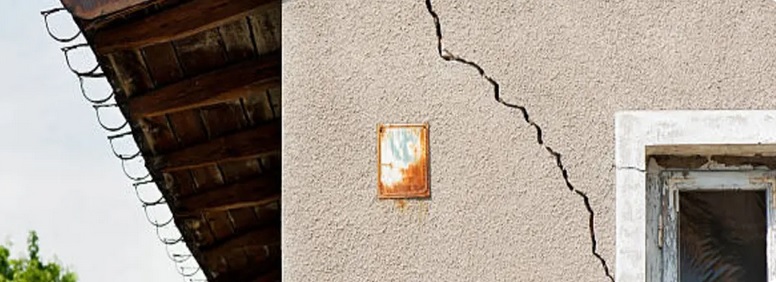
In the case, a couple purchased a house and swimming pool in 2010, but later noticed cracks on the walls and facades of the house, as well as in the swimming pool.
The buyers sued the sellers for compensation on the basis that the seller did not disclose a hidden/latent defect, called a vice caché.
The Court of Appeal found that cracks affecting the load-bearing walls, partitions, tiles and ceilings, as well as the faults affecting the structure of the pool basin, were caused by the unsuitability of the foundations and that they were of an evolving nature.
During the proceedings the buyers did not contest the fact that the cracks were visible when they viewed the property.
As a result, the seller claimed that the purchasers could not claim ignorance of the extent and consequences of the defect and that they should have investigated the cause. They contended that if the defect was observed at the time of the sale it could not be a vice caché.
In court the judges stated that although the purchasers had noted during the pre-sale visits the presence of traces of cracks on the facades, they could not, since they were not building professionals, nor required to be accompanied by an expert, be expected to recognise the extent and consequences of the defect.
The court also noted that in 2001 the seller had filed a claim about the cracks with their insurer, which had been refused on the grounds that the damage fell within the scope of the ten-year building guarantee and could not be linked to a drought phenomenon.
The court therefore decided that the seller was acting in bad faith because they had not been completely open with the buyers about their knowledge of the cracks, and neither had they undertaken any work to remedy the problem.
As a result, the court concluded that the defect was not apparent and that the sellers had acted in bad faith. They were ordered to pay compensation to the buyers.
If you seek advice on any of the issues raised in this article, you can contact our Property Clinic, and one of our advisors will get back to you.