
3rd May 2024
Chateau owners take legal action against proposed installation of poultry shed.
To read the article you can take out a premium subscription for €20/YEAR at Subscribe to France Insider.
You can see the full catalogue of our articles at France Insider News.
If you no longer wish to hear from us simply unsubscribe using the link below.
Enjoy your reading,
The Team at France Insider

3rd May 2024
Chateau owners take legal action against proposed installation of poultry shed.
&
In a case that was recently heard in the French court of appeal, a mayor in the commune of Bacilly, Manche, had granted planning permission for the construction of an industrial poultry building with a surface area of 1,350m2.
The proposed building measured 90 metres long by 15 metres wide, and 6 metres high. It had a capacity for 25,000 chickens.
The land on which it was proposed to construct the building was zoned for agricultural use.
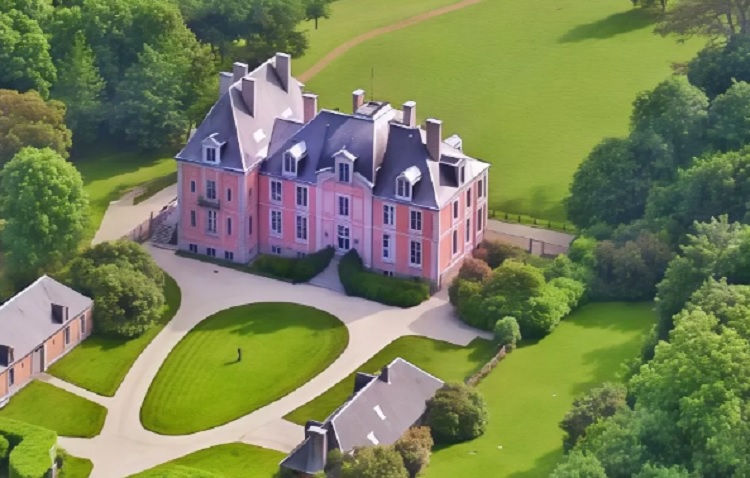
The 18th Century chateau, sitting in 19 hectares of parkland, was located at a distance of 500 metres from the proposed building. It shared a 50 metre contiguous boundary with the development site. For the remainder it was separated by undeveloped land.
The planning application that had been submitted failed to mention the presence of the chateau or its parkland.
The château owners ran a chambre d'hôte business and argued, inter alia, that the shed would have a detrimental effect on their business.
Although not listed at the time of the planning consent, the owners had subsequently made a successful application for listing.
They initially contested the planning consent in the local tribunal, but lost the case, which they decided to appeal.
In court, the council contested the right of the chateau owners to challenge the planning consent, arguing that they were not an immediate neighbour in proximity to the development and that, as a consequence, under French law they had no right to act.
Nevertheless, the company did not dispute that some nuisance would be caused by the proposed activity, notably noise, smells and dust.
As a result, the court ruled that the proximity of the chateau to the proposed building, the important status of the chateau, and that the fact that there was a risk of nuisance to neighbours granted the chateau owners a right to challenge the consent.
On the substance of the planning permit, the court noted that under the local plan all new developments were required to show that there was good vehicular access, including the provision of a turning area on the development for emergency vehicles.
The land on which the building was to be constructed was served by a public no-through road country lane. Although the developers were proposing to improve the access, together with a turning circle for lorries, the court considered that this was "without consequence", ruling that in such circumstances the council had no right under the local plan to grant the consent.
Under the local plan a planning permit would be refused “if the constructions, by their location, architecture, dimensions or the external appearance of the buildings or works to be erected or modified, are likely to affect the character or interest of the surrounding places, the sites, the natural or urban landscapes as well as the conservation of monumental perspectives. / (...) / Appearance: / The appearance of the buildings should be in the direction of a good integration into the landscape, and if necessary, be in harmony with the existing built heritage.”
Although the land in question was zoned for agricultural use, the court considered it was located adjacent to a property of an important regional character, sitting in a park that had the label ‘Jardin remarquable’ and which was open to the public.
The council did not contest the important historical and heritage status of the chateau, its buildings and park, or that it had been very well preserved.
The court ruled that: "The implementation of the project at issue is, in view of its location, its architecture and its dimensions, likely to adversely affect the character and interest of the surrounding areas, characterised by the presence in the immediate vicinity of the chateau."
As a result the planning consent was annulled.
Tom Easdown, Managing Director and Architect at French Plans, comments that: "As a general rule, if a proposed agricultural development is at least 100 metres away, a planning application will be approved. In this case, the chateau owners were able to benefit from the heritage status of their property, which rarely applies."