Undisclosed Flood Risk Plan in Sale Contract
A dispute over a flood-prone building plot has led the French Supreme Court to clarify the extent of sellers’ and notaries’ obligations on environmental risk disclosures.

Undisclosed Flood Risk Plan in Sale Contract
8th April 2026
A dispute over a flood-prone building plot has led the French Supreme Court to clarify the extent of sellers’ and notaries’ obligations on environmental risk disclosures.
The case began with the signing of a sale and purchase contract for a parcel of land intended for construction.
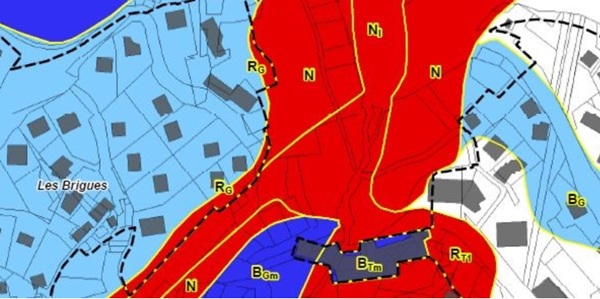
At that stage, the documentation provided to the buyers indicated, first, that the land was located in a flood-risk zone, and second, that the natural risks plan, the Plan de Prévention des Risques Naturels Prévisibles (PPRNP), had merely been prescribed by the authorities.
This distinction is important in French planning law. A prescribed PPRNP signals that a risk prevention framework is under preparation, but it does not yet impose the full set of binding regulatory constraints that come with formal approval.
Between this preliminary agreement and the signing of the final notarised deed (acte authentique), the local prefect issued an order formally approving the PPRNP applicable to the area where the land was located.
Despite this development, the buyers were not informed of the plan’s approval at the time of completion. The statutory survey report (dossier de diagnostic technique) annexed to the deed still reflected the earlier situation.
Subsequently, the buyers sought to move forward with their construction project and applied for a planning certificate. The response they received was negative, as the classification of the land within a high flood-risk zone under the now approved PPRNP meant construction was not permitted.
Legal Action
The buyers brought proceedings against both the sellers and the notaires involved in the transaction. They sought annulment of the sale as well as damages, relying on Article L125-5 of the French Environmental Code, which requires sellers to inform buyers of natural and technological risks affecting a property.
They argued that the approval of the PPRNP between the preliminary agreement and the final deed constituted a decisive change in the legal status of the land, which should have been disclosed through an updated risk statement.
The lower courts, however, dismissed their claims. The judges reasoned that the essential information had already been communicated at the preliminary agreement stage. In their view, the subsequent approval of the PPRNP did not alter the nature of the risk itself and therefore did not require additional disclosure.
The Cour de Cassation took a different approach. The court emphasised that when a property becomes subject to a PPRNP (whether prescribed or approved) after the signing of a preliminary agreement, the risk disclosure documents must be updated at the time of the final sale. This includes either providing a new état des risques or updating the existing one to reflect the current situation.
In this case, the annexed risk statement failed to mention the prefectoral decree approving the PPRNP. As a result, it did not accurately reflect the legal constraints attached to the property at the time of the sale. This change directly affected the value and intended use of the property.
Given this lack of updated information, the court concluded that the buyers had not been properly informed as required by law. It therefore held that they were entitled to seek annulment of the sale or, alternatively, a reduction in the purchase price.
Related Reading:
You just read an issue of France Insider. You can also browse the full archives of this newsletter.