June 12, 2025, 6:40 a.m.

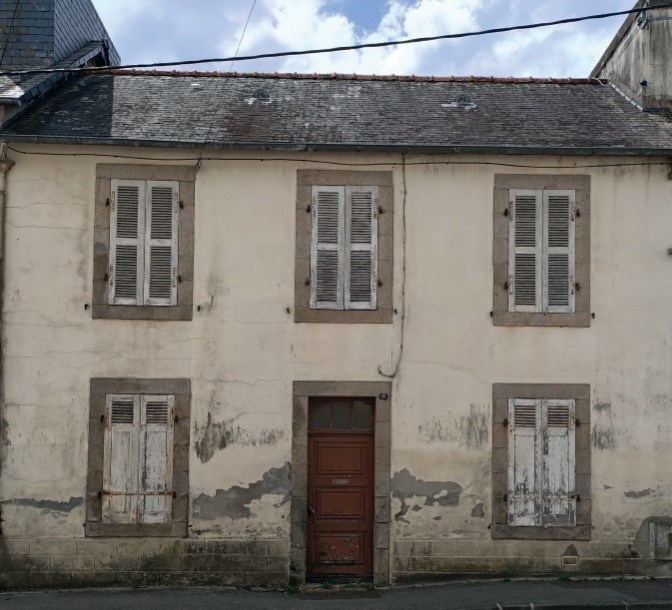
Vacant Homes in France

France Insider

France Insider

Vacant Homes in France

12th June 2025

Despite efforts by public authorities, the number of vacant homes in France remains alarmingly high, posing significant challenges for housing policies, says the French national auditor.

The report, published last month, presents a mixed picture of the public action implemented to combat vacant homes in the private housing stock.

Currently, more than 3 million private housing units are vacant, over a million of which have been vacant for at least two years.

The total number of vacant homes has increased by 60% in 30 years. All departments in France have been affected, save for the department of Herault, in the Occitanie region.

The auditors state that there are three main reasons why the properties are long-term vacant - condition, geography and family circumstances.

  • Condition - 45% are due to housing obsolescence, either because of condition or small surface.

  • Geography - 42% are characterised by their location in a area of low demand, their proximity to nuisance areas, or their location on the outskirts of commercial or historic centres.

  • Family circumstances are also a significant factor in the risk of vacancy (inheritance, nursing homes, hospitals, etc), a situation that concerns 20% of vacant housing.

The auditors distinguish between frictional vacancy arising from the normal functioning of the real estate market, and structural vacancy, where properties remain unoccupied for extended periods.

Structural vacancy is highest in rural departments of France (10.6% in Creuse, 8.8% in Nièvre, 8.5% in Meuse). Other departments with a high vacancy rate include Ardennes, Allier, Cantal, Cher, Yonne, Indre, Orne and Vosges.

On the other hand, in areas of housing shortage only 1.5% of housing had been vacant for more than two years, a total volume of 118,330 housing units (i.e. less than 10% of the total vacant housing).

For example, in Paris, while 128,000 housing units are vacant, only 18,600 (or 1.3% of the private housing stock) have been vacant for more than two years.

The graphic below shows the vacancy rate in each department of mainland France.

Despite government efforts to implement diverse housing and land use policies, as well as incentive and coercive tools for property owners, the results have been far from satisfactory.

The auditors note that the challenge of vacant housing varies significantly across different areas.

Various measures have been introduced to encourage property owners to rent out their vacant properties. Fiscal measures include the Taxe annuelle sur les logements vacants (TLV) and the Taxe d’habitation sur les logements vacants (THLV). However, they have not proven effective due to a lack of reliable data for identifying vacant properties and poor coordination with other existing measures, such as the Taxe d’habitation sur les résidences secondaires (THRS). Neither are the two empty homes taxes generally in place where there are the largest number of empty homes!

In February 2020, the government launched a plan to mobilise vacant housing and premises, including, if necessary, requisitioning these properties. However, the auditors criticize the plan for its limited resources and effectiveness, describing it as primarily a tool for raising awareness and supporting local authorities in identifying vacant housing.

A significant issue identified by the auditors is the weak coordination between the state and local authorities. Effective partnerships with local authorities are crucial, as they have the tools and direct relationships with property owners to act more efficiently. The auditors suggest that future state action should increasingly rely on partnerships with local actors.

The report also demystifies the notion of vacant housing as a solution to the more general housing crisis. While structural vacancy has increased, it primarily affects areas where demand is low and often involves properties that are unsuitable for the market. Major renovations, which property owners may not be able to finance even with public aid, are typically required.

Taxing vacant housing has not proven effective and generates little revenue. Instead, making all renovation work deductible from property taxes could potentially reduce vacancy rates in both high-demand and relaxed areas.

The auditors conclude that while vacant housing units can constitute a potentially available resource, their impact should not be overestimated. They should not be considered the primary solution to the housing crisis in Paris or other major cities. The report calls for greater differentiation in public policies and better consideration of local experiments. Local authorities, with their urban planning tools and direct relationships with property owners, are best positioned to act effectively.

Related Reading:

  • Empty Homes Taxes in France

  • Guide to Local Property Taxes

You just read an issue of France Insider. You can also browse the full archives of this newsletter.